
Checking Your Skin At Home
Did you know that 1 in 5 Americans will develop skin cancer by the age of 70?
Skin cancer can appear in many shapes and sizes, so sometimes, it can be challenging to identify. We cannot stress enough the importance of doing self skin exams at home once a month. Getting to know your own skin is key to understanding what to look for, and it makes it easier to identify spots that are different or changing.
How to Check at Home:
The American Academy of Dermatology (AAD) recommends following these steps when performing your at-home skin check:
Examine the front and back of your body using a full-length mirror
Raise your arms to check your sides and underarms
Bend your elbows to closely inspect your forearms, underarms, and palms
Sit down to examine your legs and feet, including the backs of your legs, soles, and between your toes
Use a hand mirror to check the back of your neck
Use both a full-length and hand mirror to inspect your back, buttocks, and groin area
Part your hair to carefully examine your scalp, using a mirror or asking for assistance if needed.
Performing these check regularly can help you become familiar with your skin and notice any changes early.
What Should You Look For?
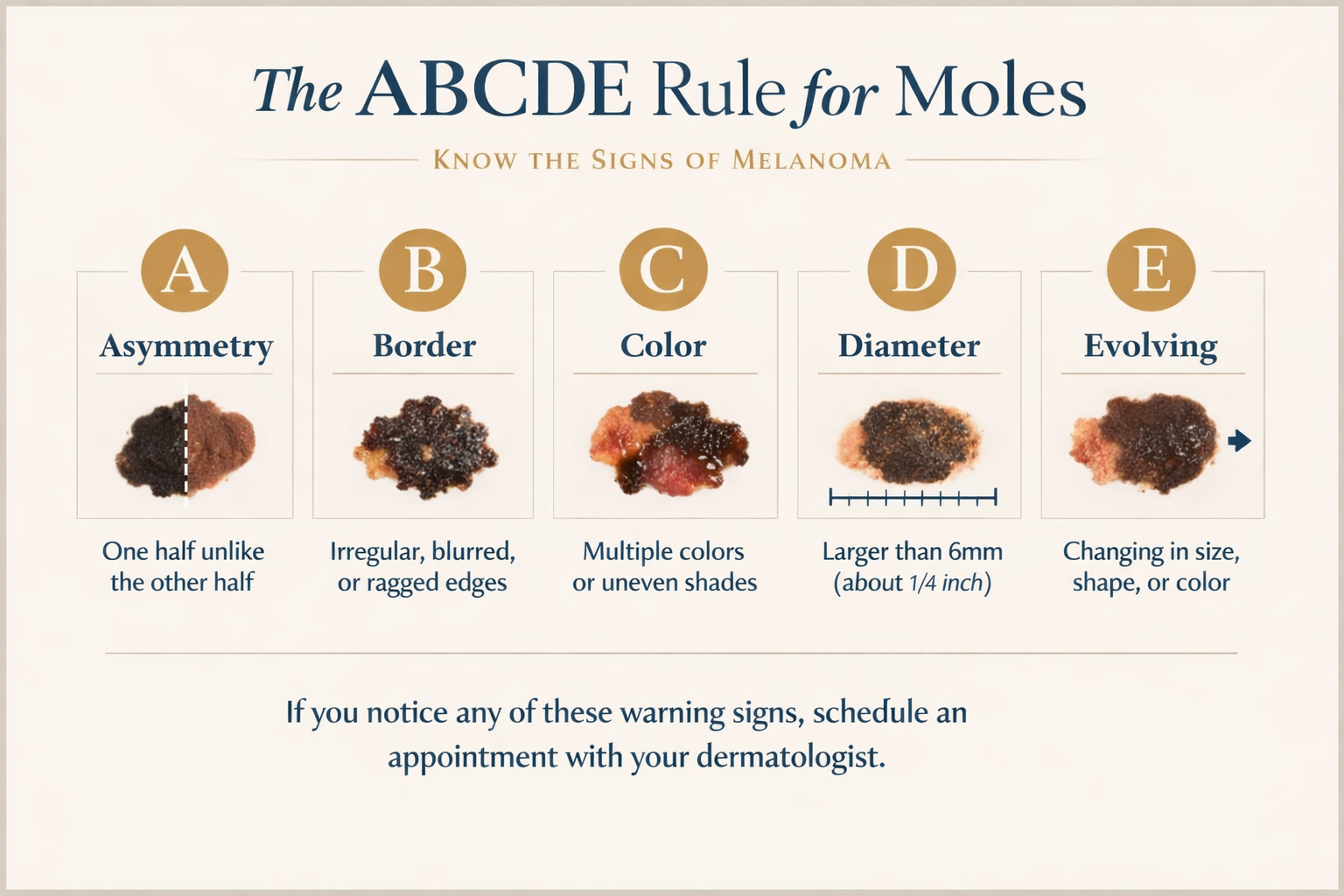
Performing regular skin checks at home can help you detect early signs of skin cancer and other concerning changes. Be sure to watch for:
An open sore that does not heal
A sore that heals and then returns, especially if it bleeds again
A persistent reddish or irritated patch
A shiny bump or nodule
A while, yellow, or waxy scar-like area
Scaly red patches that may crust or bleed
A growth that resembles a horn
Moles with uneven or irregular borders
Moles that contain multiple colors
A mole that is growing or changing in size, especially if the growth seems disproportionate over time
If you notice any of these changes, it’s important to schedule an evaluation with a dermatology provider.
What to Expect During Your Exam
While giving yourself a skin exam at home is a great idea, we do recommend coming in for a full body skin exam with one of our dermatologists for a more thorough exam.
What to Expect During Your Visit
During a skin cancer screening exam, your provider will perform a complete head-to-toe evaluation, carefully checking for any spots that could be pre-cancerous or cancerous. This is often referred to as a full-body skin exam.
You will be provided with a gown for your comfort, and our team will ask a few questions to gather relevant medical history related to your skin health.
Your provider will also review skin protection practices, including sunscreen use and sun protective clothing, to help you maintain healthy skin.
If any concerning spots are found, your provider may recommend monitoring them with follow-up visits or performing a skin biopsy. Biopsies are done the same day or scheduled for a later time if needed.
Additionally, if any skin conditions are diagnosed during your visit, your provider will discuss appropriate treatments or prescribe medications as necessary.
What Should I Do Before My Visit
To help us provide the most thorough care, we recommend gathering any past dermatology records before your appointment. This includes previous skin biopsies, treatments, or notes from other dermatology providers, as this information is very important for a complete evaluation.
Please schedule your appointment before sending over records so we can ensure they are properly added to your file and ready for your visit. This helps us make the most of your time in the office, and provide the best care possible.
Who Will Be in the Room During Your Exam
We understand that a full skin exam can feel personal, and we're here to make you as comfortable as possible. During your visit, a medical assistant will be present alongside your dermatology provider at all times.
They will help guide you through the visit, assist with your intake, and ensure your questions and concerns are addressed. Our team is committed to maintaining your comfort, privacy, and dignity throughout your exam.
What Happens After Your Exam?
After your skin exam, you will receive a personalized counseling sheet summarizing any topics or recommendations discussed during your visit.
You’ll also receive a complimentary goodie bag with skincare and sunscreen samples to help you maintain healthy skin at home.
Follow-up appointments are determined on a case-by-case basis. Your dermatologist will recommend the frequency of future visits based on the findings from your exam, ensuring you receive the care that’s right for you.
Important Tips for Your Visit
For the most thorough skin exam, we recommend the following:
Remove nail polish: Skin cancer can occasionally develop under the nails, so bare nails allow for a complete check
Minimize makeup: Makeup is fine to wear, but a clear view of your skin helps us access changes more accurately
Monitor mole color: Changes in the color of moles can be an early sign of pre-cancerous or cancerous spots. Being able to see your natural skin tone and mole coloration ensures we can perform the most comprehensive exam possible.
Following these simple steps helps us provide the safest and most effective evaluation of your skin.